Spelling & Reading
Tactile phonics tiles, salt trays, and letter builds for kids who struggle with reading and writing.
Hands-On Learning
Simple activities for reading, writing, and math using things already at home.
See the activities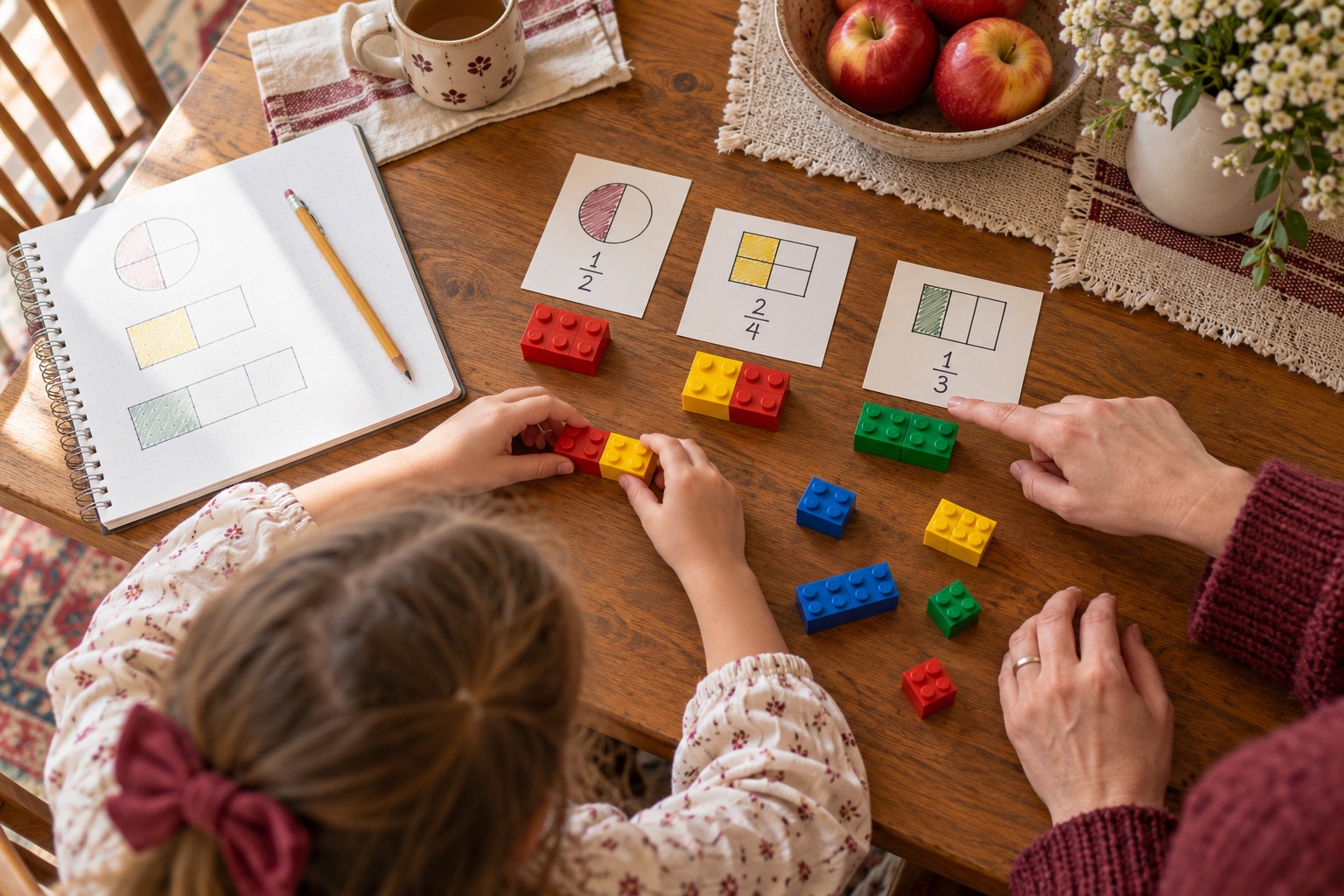
Tactile phonics tiles, salt trays, and letter builds for kids who struggle with reading and writing.
Story building with physical objects, tape outlines, and sentence organizers before pencil touches paper.
Spelling towers, fractions, story scenes, and perimeter walls using the bricks you already own.
Base-ten manipulatives, tape perimeter paths, and visual math mats.
Kitchen-table investigations, liquid density columns, and simple backyard physics.
Cooking math, grocery budgeting, building projects, and nature study that counts as school.
Pick one, then open the supplies and steps.
Skill: phonics rimes and word building (-at, -op, -ing)
Snapping bricks together makes blending sounds concrete instead of abstract. It gives hands something to hold while sounding out word patterns.
If it goes wrong: If your child gets frustrated, make the tower together and let them do just the snapping. Try only two or three starters, then stop on a win.
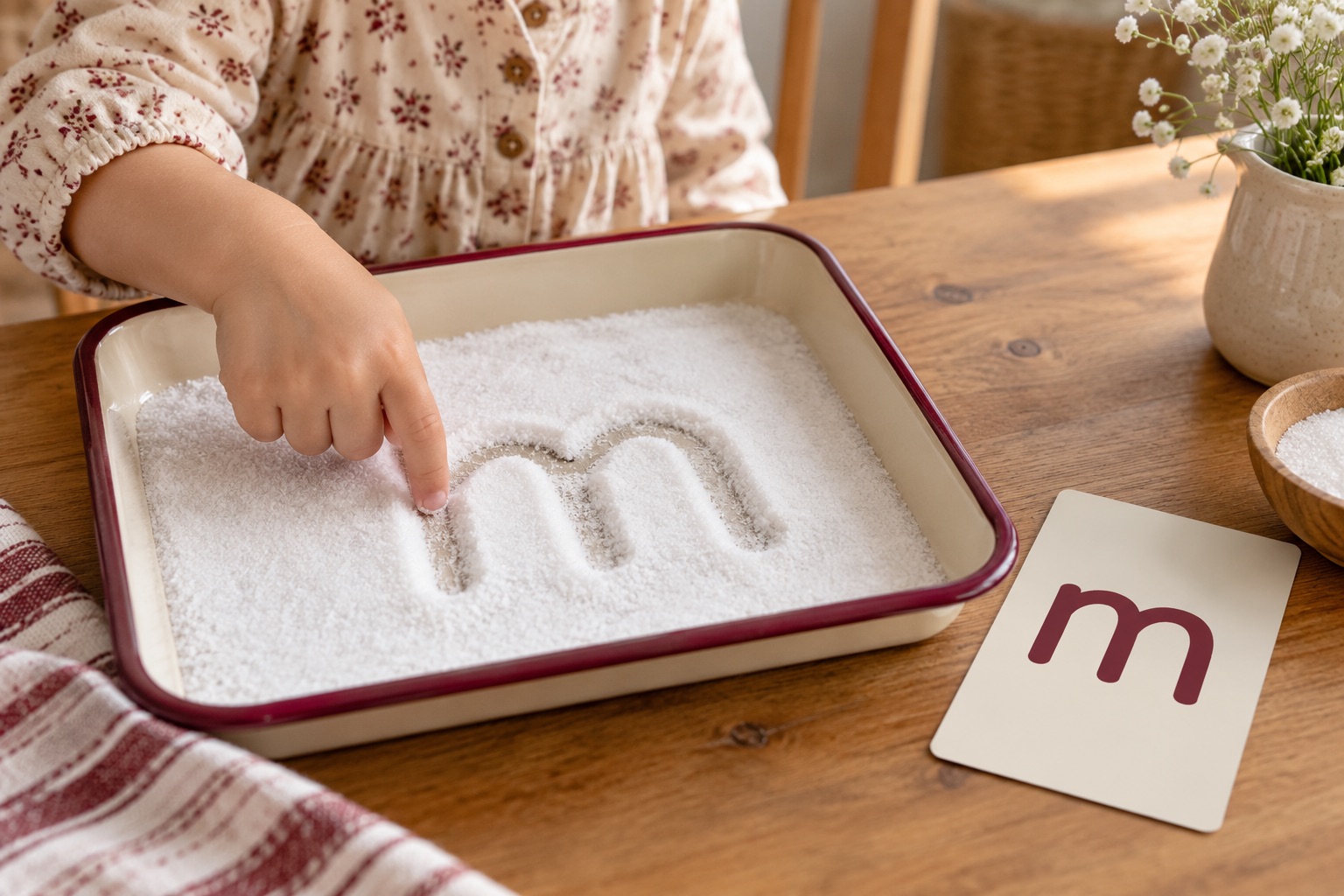
Skill: letter formation and high-frequency word muscle memory
Dragging a finger through fine salt gives instant sensory feedback that paper and pencil can't. A gentle shake resets it, so mistakes cost nothing.
If it goes wrong: If salt ends up on the floor, move the tray into a larger box lid. If a finger feels odd, try a paintbrush handle.
Skill: descriptive writing and story sequencing
Instead of staring at a blank notebook line, holding three random objects gives reluctant writers a character, a setting, and a problem right away.
If it goes wrong: If the writing stalls, let them dictate while you type or write. The goal is the story, and spelling can come on another day.
Skill: fractions, perimeter, and area
A real baseplate makes parts of a whole something your child can see and count, using the studs as a built-in grid.
If it goes wrong: If counting gets messy, put a small piece of tape at the starting corner so you always know where you began.
Preview the printables before you choose one.
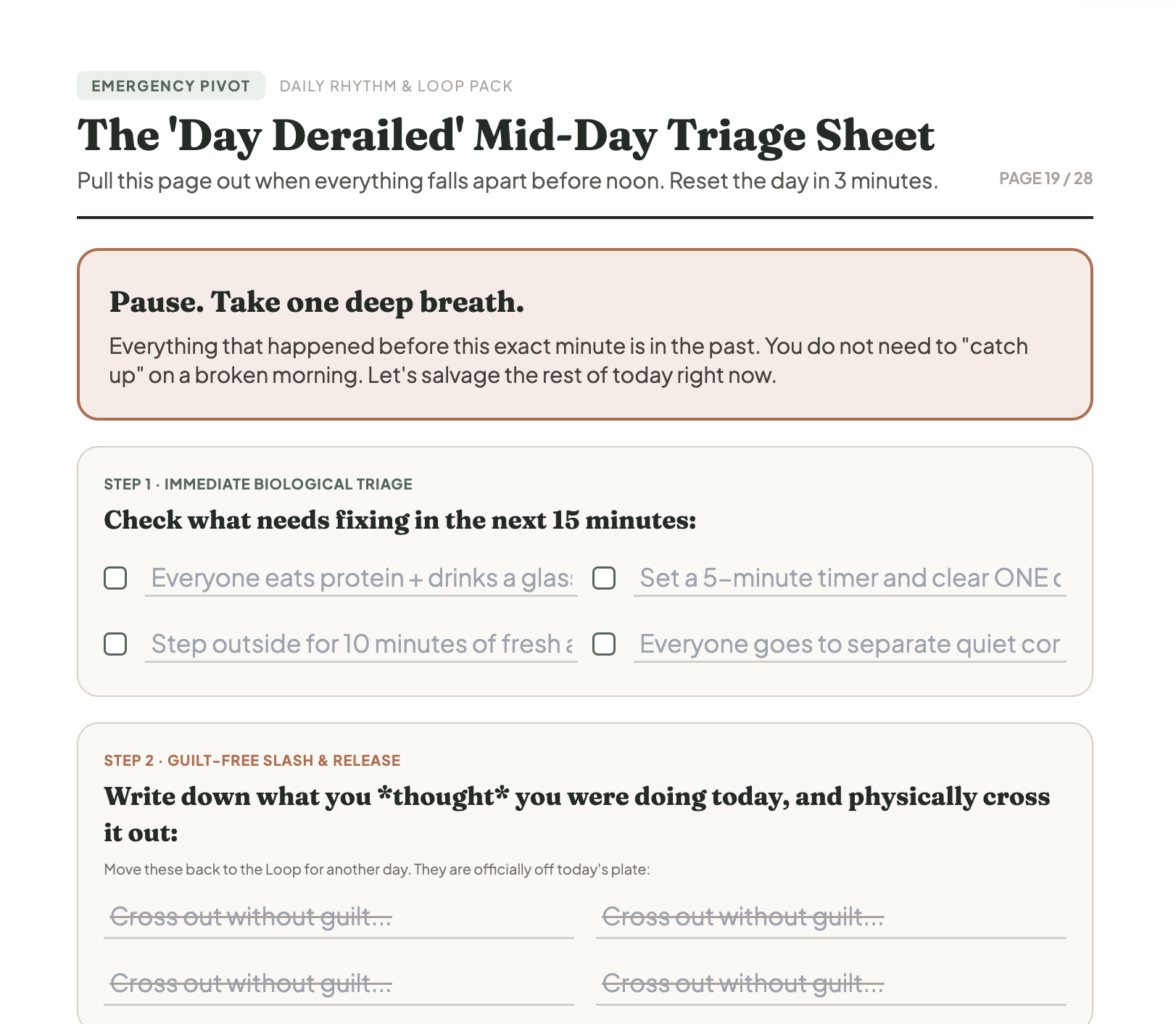
A visual, low-stress planning system for days that derail. Uses visual blocks and flexible loop scheduling instead of rigid time slots. Supplies: none.
$14 · 28-page PDF
Buy the planner packSecure Stripe checkout with private digital delivery after payment verification.
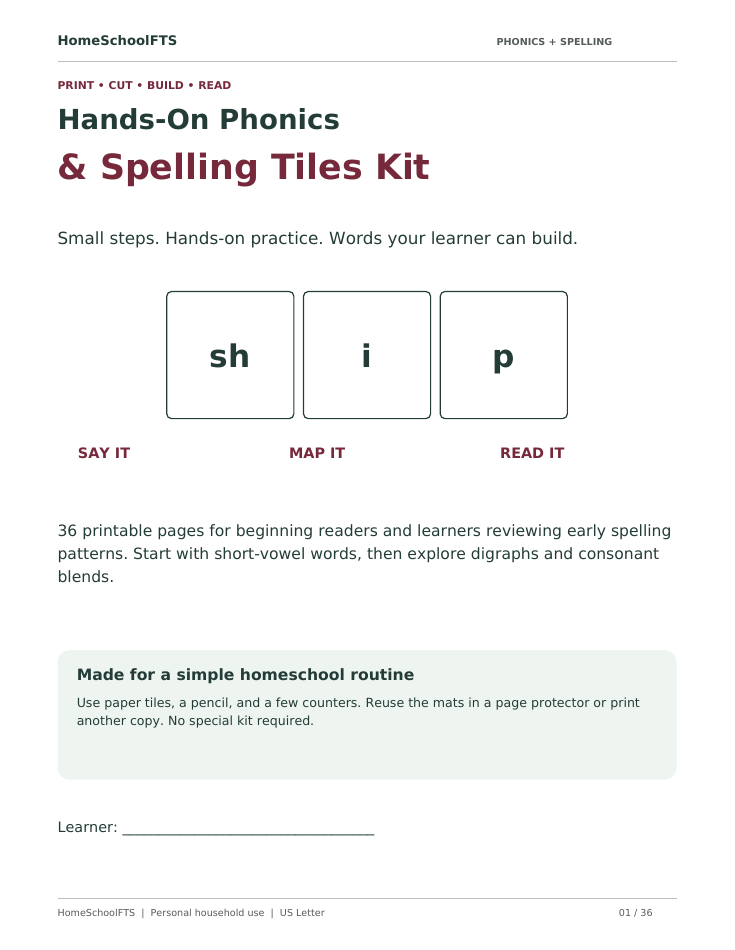
Build early reading and spelling skills with cut-apart letter and digraph tiles, reusable sound-box mats, short-vowel and blend practice, and word-building games. Includes parent instructions and answer keys.
$12 · 36-page US Letter PDF
Buy the phonics kit · $12Printable digital download for personal household use. Private PDF delivery after payment verification. No physical item is shipped.
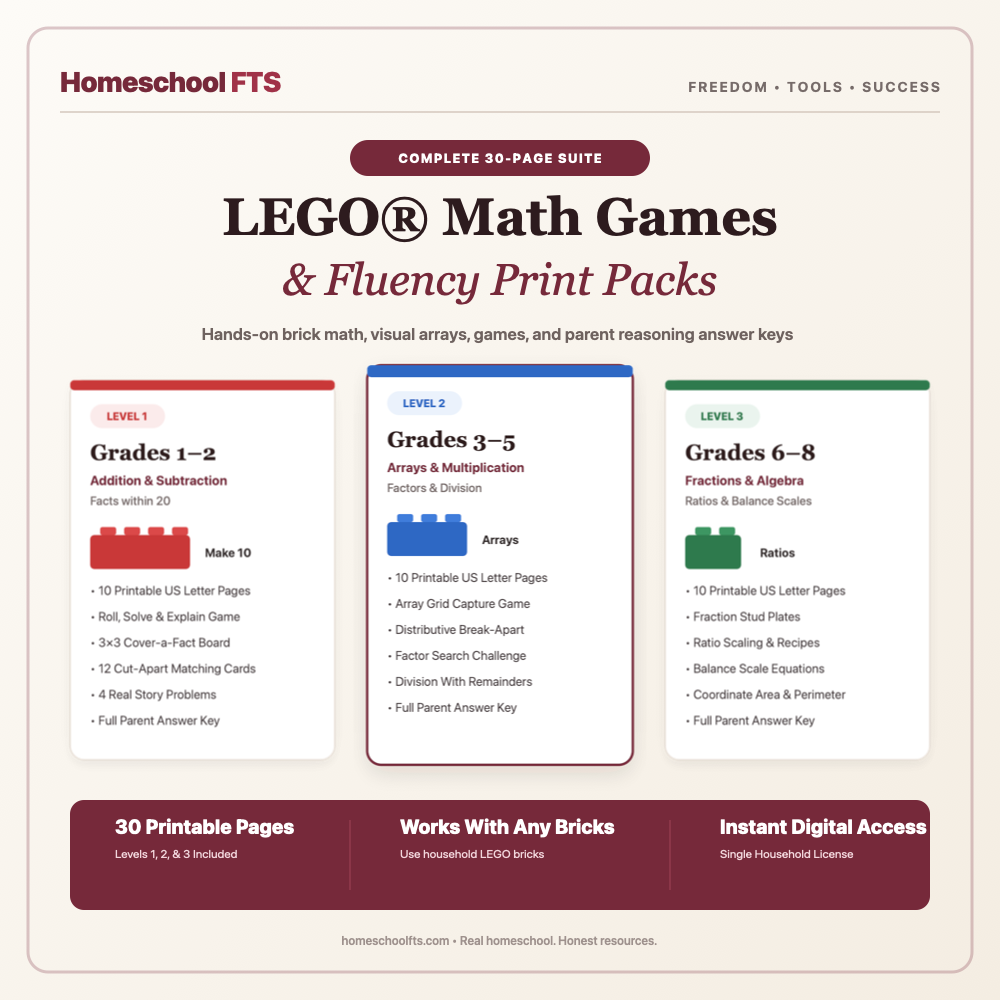
Play the free brick math games, then choose the matching print pack for Grades 1–8 in the Math shop.
Looking for more math resources? Explore the complete HomeSchoolFTS shop.